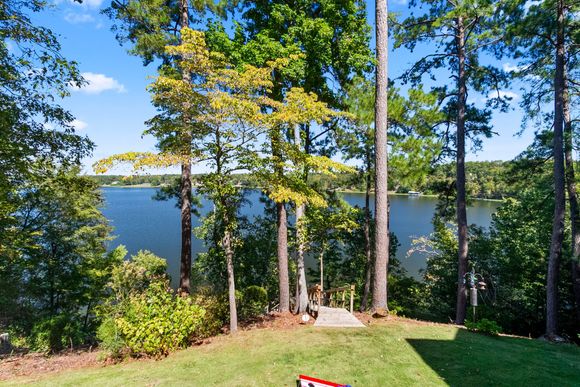
Alabama is an East South Central state bordered by Tennessee to the north, Georgia to the east, Florida and the Gulf of Mexico to the south, and Mississippi to the west. The state has a panhandle along the Gulf of Mexico and boasts a subtropical climate with long, hot summers and mild winters. Mobile, the state's only seaport, is a main United States seaport; Alabama has one of the best water-transportation systems in the South. Alabama's landscape includes forest-covered hills and ridges in the north and dense pine forests, rolling grasslands, and low croplands in the south. The Mobile Delta region in the southern area of the state has numerous swamps and bayous, which are shallow channels filled with slow-moving water. Beaches border Mobile Bay and the Gulf of Mexico at the state's southern tip.
Alabama Interactive offers state and local entities the expertise to automate routine, time-consuming tasks into interactive web-enabled applications for both citizens and businesses, saving taxpayer dollars as well as streamline government processes. In November of 2005, the State of Alabama awarded a state contract to Alabama Interactive for eGovernment services to agencies, commissions, boards, etc. for the State of Alabama. The contract is for a term of two years and provides for two renewal periods; one of two years and one of one year at the option of the State for a total of five years. The contract provides for the following services: transaction processing between the State of Alabama and its citizens over the Internet, Interactive Voice Response (IVR) processing, credit card processing, application development, integration with agency's existing systems, security, application hosting, application support and management reporting.
The Alabama Center for Traditional Culture, a division of the Alabama State Council on the Arts, was created in 1990 to further the agency's mission to research, document and preserve the state's folk cultures. Folk life is comprised of those traditional expressions of culture that have grown from generation to generation among the many communities that have settled in this state--communities that share the same historical experience, ethnic heritage, language, occupation, religion, or geographic area.
Folk life includes folk arts such as traditional crafts, music and dance, as well as, regional food ways, folk architecture, beliefs, storytelling, myths, and medicinal practices, etc. Because it is a product of an historical and geographical process, Alabama folk life, in its many facets, uniquely reflects the personality of our state and values and aesthetics of its communities. The unique folk expressions of Alabama identify and symbolize those communities that have originated them and nurtured them, enlivening and giving meaning to the lives of Alabamians. We have a rich heritage of folk traditions that is often overlooked, taken for granted and misunderstood. They define what it is to be an Alabamian. Given the diversity and wealth of Alabama's folk life, we strive to broaden an understanding of our community-based traditions so that all Alabamians can be proud of this shared inheritance.
Alabama's generally warm, humid climate results from its mid-latitude location and proximity to the Gulf of Mexico. This location also produces the often turbulent weather patterns that regularly bring tornadoes and hurricanes to the state. Located within the Humid Subtropical region in the Koppen classification system, Alabama's climate is characterized by relatively mild winters, hot summers, and year-round precipitation.
Alabama is not the most popular state to land on a traveler’s itinerary. It’s a fairly small state in comparison to other U.S. States. It doesn’t have a lot of the famous attractions that you’ll find in more popular states like California or New York. However, Alabama is actually a pretty neat place with some interesting things to see if you’re willing to give it a chance. Plus, it’s really affordable to visit Alabama which is a factor that a lot of us have to take into consideration when we travel. One great way to see Alabama is to do a road trip throughout the state. Here is a look at the top Ten Alabama Cities that you might want to check out if you get a chance to take this type of vacation:
- Montgomery: This is the capital of Alabama so it’s one of the cities that you really must see if you’re going to get a sense of what life is like in this state. It’s located in the Southeastern part of the city so you’re truly in the South when you’re spending time in Montgomery. It has a lot of old-fashioned Southern charm.
- Montgomery: Montgomery may be the capital of Alabama but it’s not the largest city in the state. People who want to check out the largest urban area of Alabama will want to make sure that Birmingham is on their itinerary. It’s an interesting place with a rich history.
- Birmingham: Birmingham is the largest city of Alabama in terms of population. However, it’s not the largest Alabama city in terms of the actual size of the land that makes up the place. That honor goes to Huntsville which is another interesting city to check out. It’s known as a place where NASA is active and one of the most popular sites to see here is the U.S. Space and Rocket Center Museum.
- Decatur: Another northern city to check out in Alabama is Decatur. It’s located on the Tennessee River up north and is frequently referred to as The River City. There are also quite a few creeks and lakes here to enjoy. The main thing to check out in this city is one of the annual events that it’s well known for.
- Mobile: People who are interested in the history of Alabama will want to make sure to check out Mobile since it’s the oldest city in the entire state. It’s also the third largest city in terms of population. And it’s a beautiful city particularly for those people who enjoy being on the water since it’s located at the intersection of the Mobile River and the Mobile Bay.
- Tuscaloosa: This is the city where the University of Alabama is located. If you’re checking out this city then it’s probably because you want to see the campus of the university and to enjoy the activities that take place on and around the campus. It’s always good to get a feel for a college town in any state that you visit and this one is ideal.
- Auburn: Another really great college town to check out in Alabama is Auburn which is home to Auburn University. This town is, in fact, more of a true college town than Tuscaloosa is since the main attraction here is only the school.
- Dothan: People who know Dothan are usually people who know peanut butter. That’s because it has a huge peanut crop which provides much of the industry for the area. It’s even called the world’s peanut capital by many people which you can see listed on a monument at the local visitor information center.
- Gantts Quarry: You can’t check out Alabama’s cities without getting a taste for a quieter side of Alabama. Quiet is exactly what you’ll find in this city which is an old quarry and ghost town. It’s considered by most to be its own town although it’s technically been annexed to become part of the next town over which is Sylacauga.
- Summerdale: If you want to check out a small town in Alabama then another good option would be Summerdale. This is a rural town that will give you a good sense of how real people live in this state. If you’re in need of something to do while you’re here, there’s a Spear Hunting Museum that you might find to be of interest.
With a long and varied history, Alabama became the focal point of Spanish explorers in the 16th century and was later settled by the French who established the first outpost at Mobile in 1702. Later under British rule, Alabama territory officially became part of the new United States following the Revolutionary War. As the drums of war again sounded in the mid-1800's, Alabama gave rise to the southern Confederacy when, for a short period beginning in 1861, Montgomery was chosen as the Confederate capital. In the 20th century, Alabama was in the spotlight as the scene of the historic civil-rights movement led by Martin Luther King, Jr. including a bus boycott in Montgomery begun in 1955, and the “Freedom March” from Selma to Montgomery in 1965. Today, major Alabama tourist attractions include the sun and sandy beaches of the Gulf Coast area, and a network of scenic & beautiful state parks. Other top attractions include the King Center, the Rosa Parks Museum & Library, Bellingrath Gardens in Theodore and the USS Alabama in Mobile.
Air Transportation System: Alabama has 89 public use airports and 58 licensed heliports. Through the Alabama Airport Improvement Program and the Federal Aviation Authority Airport Improvement Program, cities can develop airports for industrial and other civil use. Most public utilize airports are lighted and accommodate corporate aircraft. Alabama is served by six major commercial airlines and seven commuter airlines operating through seven airports. International flights are easily accessible via direct flights from major connecting cities. In addition, Alabama is located between two of the country’s largest air freight centers - Memphis and Atlanta. Five Alabama cities - Birmingham, Dothan, Huntsville, Mobile, and Montgomery - have foreign trade zones with direct access to their air transportation system. Each foreign trade zone has been designated for the promotion of international commerce through the duty-free, quota-free entry of foreign goods under United States Customs supervision.
Railroad System: Annually, 25 railroad companies serve the state, carrying 170 million tons of cargo over 5,362 km of track. Excellent major line connections provide shippers fine access to all major market centers. Most of Alabama’s main line service is provided by five class I companies: BNSF Railway Company, Canadian National Railway Company, CSX Transportation, Inc., Kansas City Southern Railway Company, and Norfolk Southern Corporation. The remaining Class III, or short-line, railroads connect with the mainline routes. From Birmingham, normal rail delivery time is only two days to Houston, St. Louis, Cincinnati, Washington, DC and most of the greater southeastern United States, Dallas, Kansas City, Chicago, Detroit, Pittsburgh and the mid-eastern United States are only three days delivery time.
Waterway System: Alabama’s 1,300 miles of navigable waterways along six corridors make it one of the longest inland waterway systems in the nation. These commercially passable Systems connect to more than 15,000 miles of inland waterways in 23 states via the Tennessee-Tombigbee and the Gulf Intracoastal water systems. Eleven state-managed dock facilities are located along these water corridors. All waterways and the associated locks and dams, which are operated by the United States Army Corps of Engineers, provide cost-effective and energy efficient transportation for shippers.